
.jpg)

Mongolian Geography
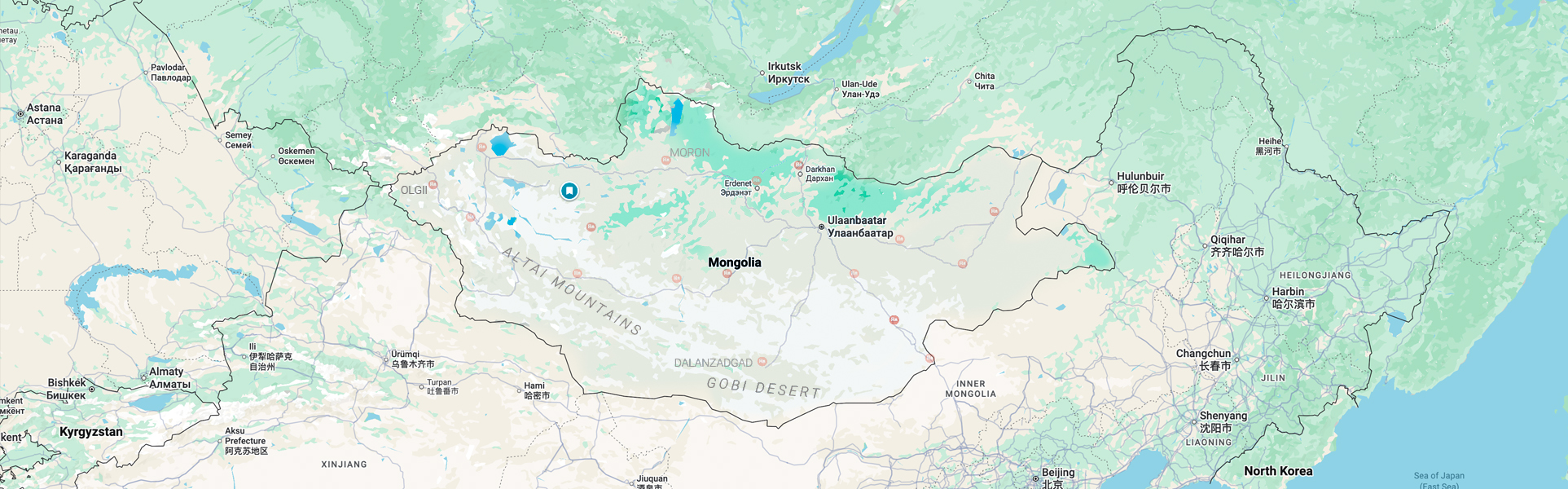
Mongolia is a land of remarkable contrasts. From the snow-capped peaks of the Altai Mountains to the vast grasslands of the eastern steppe and the endless horizons of the Gobi Desert, the country offers some of Asia's most diverse landscapes. Despite being one of the world's least densely populated nations, Mongolia contains an extraordinary variety of ecosystems, cultures, and natural wonders. Explore the country's mountains, deserts, forests, rivers, and lakes to discover the geography that has shaped Mongolia's nomadic way of life for centuries. Select one of the regions below to continue exploring Mongolia's geography.
Mountains of Mongolia
Mongolia is often associated with vast grasslands and the Gobi Desert, but mountains cover nearly a third of the country and shape many of its most spectacular landscapes. From the snow-capped peaks of the Altai in the west to the forested mountains of Khentii and the volcanic landscapes of Khangai, Mongolia offers remarkable opportunities for trekking, horse riding, wildlife observation, photography, and cultural exploration.
For centuries, these mountain ranges have provided shelter for nomadic communities, wildlife, and ancient trade routes. Today they remain some of the most remote and unspoiled mountain environments in Asia.
Desert of Mongolia
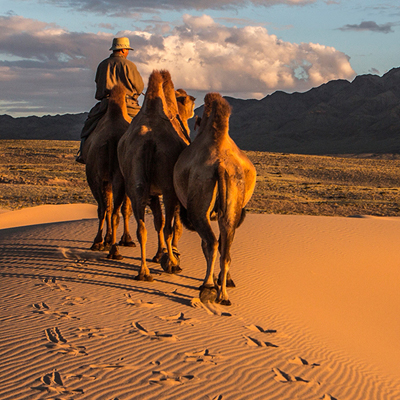
The Gobi Desert is one of Mongolia's most iconic landscapes, stretching across the country's southern regions. Far more than endless sand, the Gobi is a land of dramatic canyons, towering dunes, dinosaur fossil sites, unique wildlife, and nomadic camel-herding culture. From the singing sands of Khongor to the remote cliffs of Khermen Tsav, the Gobi offers some of the most extraordinary travel experiences in Asia. Read more. Read more
Mongolian Forests
Mongolia is not a huge desert, but it is a country of fresh water lakes, rivers, magnificent mountains and heavily forested regions where hillsides and valley meadows are spangled with alpine flowers. Country covered by closed forests. The forests are mainly located in the north-central parts of the country, forming a transition zone between the Great Siberian boreal forest and the Central Asian steppe desert. Taiga zone which covers 5 percent of Mongolian territory occurs only in northern Mongolia, where it is found in the Khentii Mountains, in the mountainous terrain around Lake Khuvsgul, back part of Tarvagatai mountain range, first higher place near Orkhon river and some parts of Khan Khukhii mountain range. Read more
Mongolian Steppes
The Mongolian steppe is a vast and open landscape that stretches across the heart of Mongolia, encompassing approximately 80% of the country's territory. It's a region characterized by its expansive grasslands, rolling hills, and occasional mountain ranges, creating a panorama that seems to stretch endlessly to the horizon. Read more
Mongolian Rivers and Lakes
If you travel in Mongolia you will see beautiful natural landscapes of Mongolia and fresh rivers, crystal clear lakes and icy streams. Mongolia is the world's most extreme continental climate and notable aridity. In spite of its aridity, Mongolia has substantial reserves of surface and ground water with almost 4000 rivers, the total length of which is more than 40,390 miles (65,000 km) and 16 large lakes. The rivers are inundated with fresh water resources and abundant fish populations. Read more
Maps Mongolia
Mongolian travel and tour maps
Related Blogs


Recommended Tours