
.jpg)


People’s revolution (1921) and Building Socialism
Mongolia's Revolution of 1921
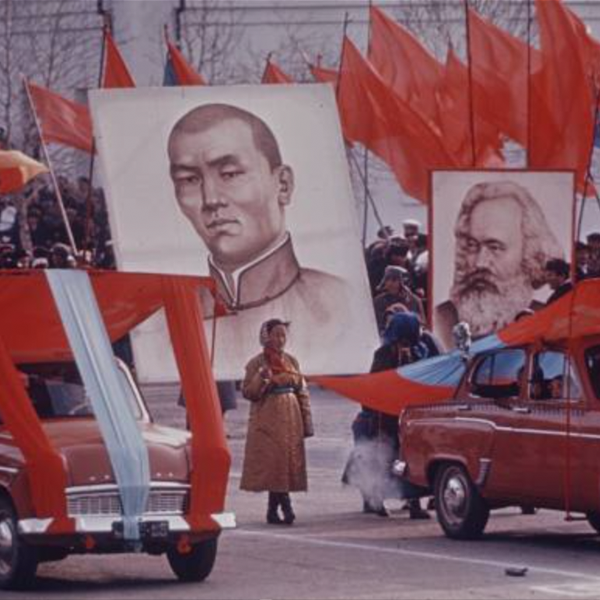
The Mongolian People's Revolution of 1921 marked a major turning point in the country's modern history. Revolutionary forces led by Damdin Sukhbaatar, with support from Soviet Russia, helped end Chinese occupation and established a new government in Mongolia.
Although Bogd Khaan remained the formal head of state until his death in 1924, political power gradually shifted toward the revolutionary government and the Mongolian People's Revolutionary Party.
The events of 1921 are regarded as a key step in preserving Mongolia's independence and shaping the modern Mongolian state.
Establishment of the Mongolian People's Republic
Following the death of Bogd Khaan in 1924, Mongolia adopted its first constitution and officially became the Mongolian People's Republic.
Over the following decades, Mongolia developed close political, economic, and military ties with the Soviet Union. The country adopted a socialist system and introduced major reforms in administration, education, healthcare, and infrastructure.
For much of the twentieth century, Mongolia remained one of the world's few socialist nations.
Modernization and Development
During the socialist period, Mongolia underwent significant modernization.
Major developments included:
• Expansion of public education
• Establishment of nationwide healthcare services
• Growth of industry and mining
• Construction of roads and railways
• Urban development, particularly in Ulaanbaatar
• Electrification and communications infrastructure
Literacy rates increased dramatically, and many social services became accessible throughout the country.
Society During the Socialist Era
While the socialist system brought modernization and economic development, it also placed political power under a single-party government.
Religious institutions faced restrictions, and many monasteries were closed during the 1930s. Traditional nomadic life continued in many areas, but livestock production was increasingly organized through collective systems.
Despite these changes, Mongolia preserved many elements of its cultural identity, language, and nomadic heritage.
Mongolia and the Soviet Union
Throughout the socialist era, Mongolia maintained a close relationship with the Soviet Union.
Economic assistance, technical expertise, educational exchanges, and infrastructure projects played an important role in the country's development. Mongolia also participated in regional socialist organizations and maintained strong political ties with other socialist states.
The End of Socialism
By the late 1980s, political and economic changes taking place across Eastern Europe and the Soviet Union began influencing Mongolia.
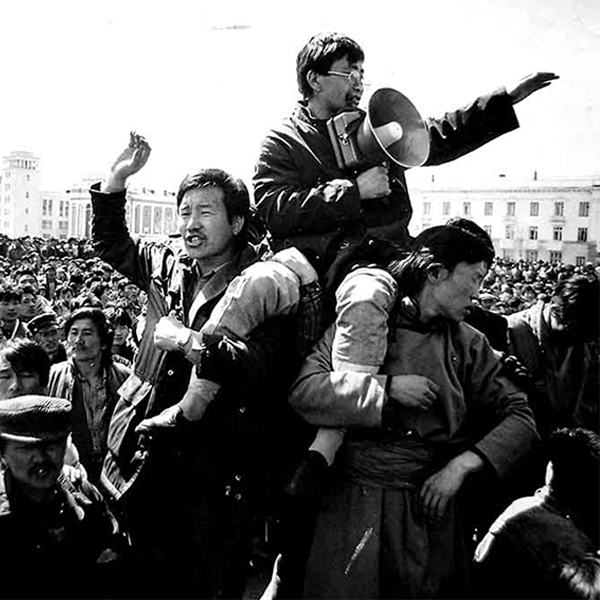
In 1990, peaceful democratic demonstrations led to political reforms and the introduction of a multi-party system. These events marked the end of the socialist era and the beginning of Mongolia's democratic transition.
Legacy of the Socialist Period
The socialist era left a lasting impact on Mongolia. Many of the country's schools, hospitals, public institutions, transportation networks, and urban infrastructure were established during this period.
Today, the legacy of socialism remains an important chapter in Mongolia's modern history, linking the country’s traditional past with its contemporary development.