



.jpg)


Inside the Sagsai Golden Eagle Festival in Mongolia
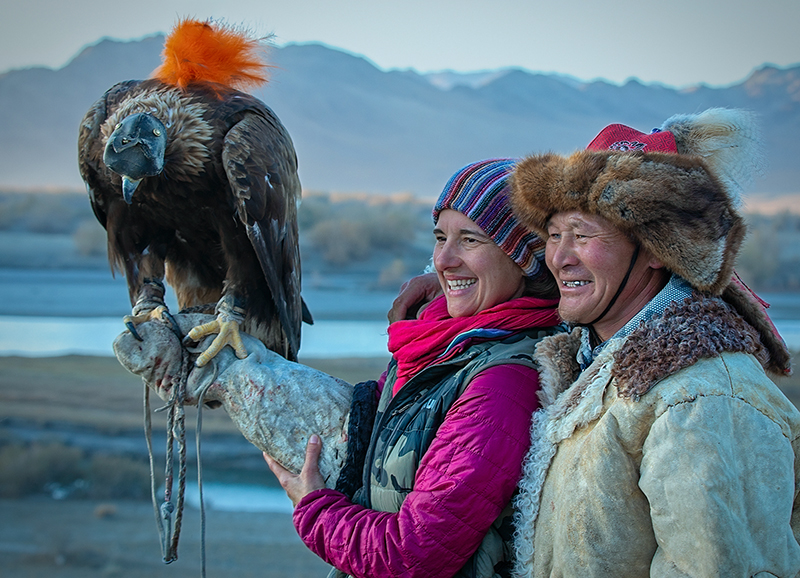
Every autumn, travelers from around the world arrive in Mongolia hoping to witness one of the last great horse-and-eagle traditions still alive today.
Most travelers know it simply as the Golden Eagle Festival, but in recent years another name has become increasingly recognized among photographers, filmmakers, documentary teams, and returning cultural travelers — the Sagsai Golden Eagle Festival.
Held annually on September 17–18 near Sagsai soum in Bayan-Ulgii Province, the festival has gradually become one of Mongolia’s most distinctive cultural and photography-focused events. Unlike festivals built mainly around crowds and tourism, Sagsai still feels closely connected to the mountains, nomadic life, eagle hunter families, and the daily rhythm of Kazakh culture in the Altai region.
Rather than feeling like a performance separated from local life, the festival grows naturally from the landscape and the people who continue this tradition today. Over the years, it has also become closely connected with photography expeditions, documentary projects, and long-term collaborations with eagle hunter families throughout western Mongolia.
WHAT IS SAGSAI?
Sagsai is both the name of a river valley and a soum (administrative district) in Bayan-Ulgii Province in western Mongolia. The region is widely known as one of the most important centers of Kazakh eagle hunting culture in Mongolia.
Today, more than 80 active eagle hunters live throughout Sagsai and the surrounding areas. Many are connected through the Sagsai Eagle Hunter Association, which plays an important role in preserving local eagle hunting traditions and organizing the annual festival.
Since first being established in 2018, the Sagsai Golden Eagle Festival has continued growing each year while still maintaining a strong connection to local eagle hunter communities.
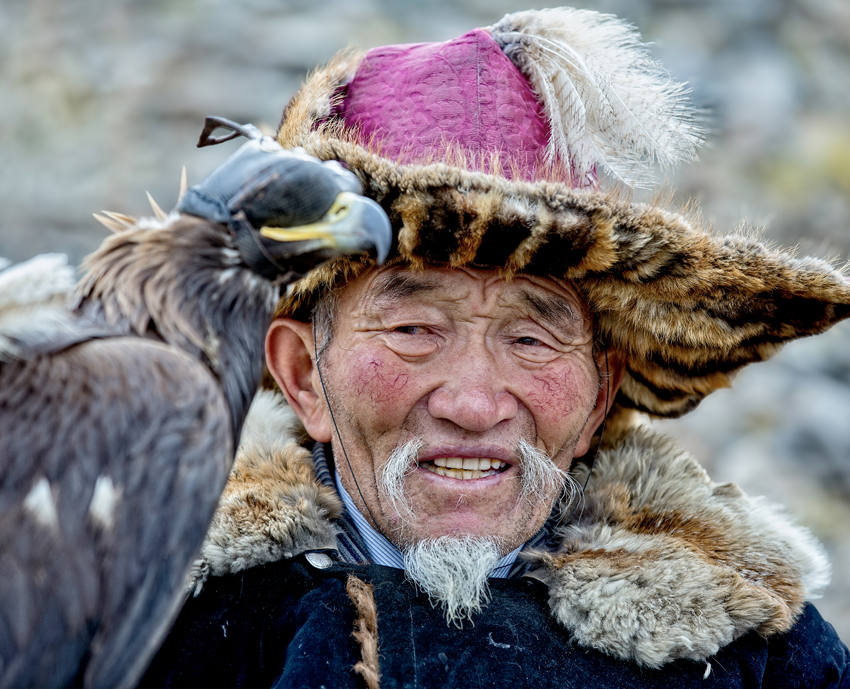
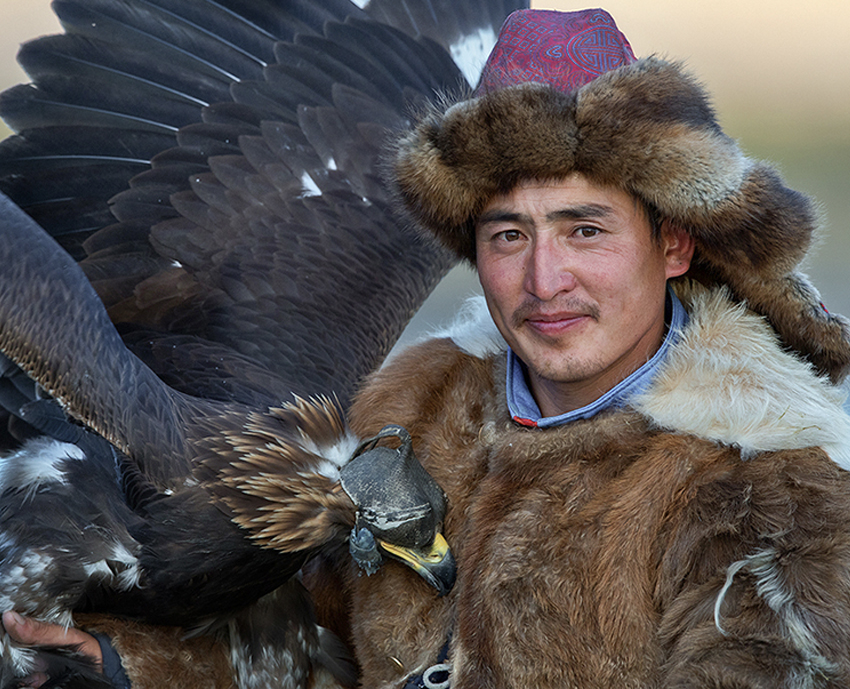
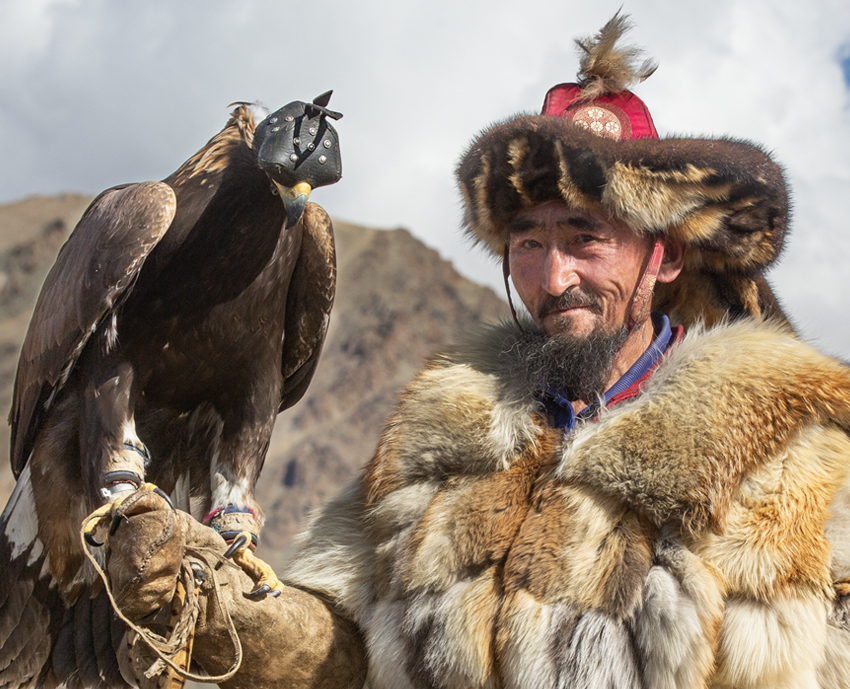
Among the best-known eagle hunters from the region is Serik Jenisbek, whose images have become internationally recognized through documentaries, photography projects, and cultural productions from around the world.
A FESTIVAL DESIGNED AROUND THE LANDSCAPE
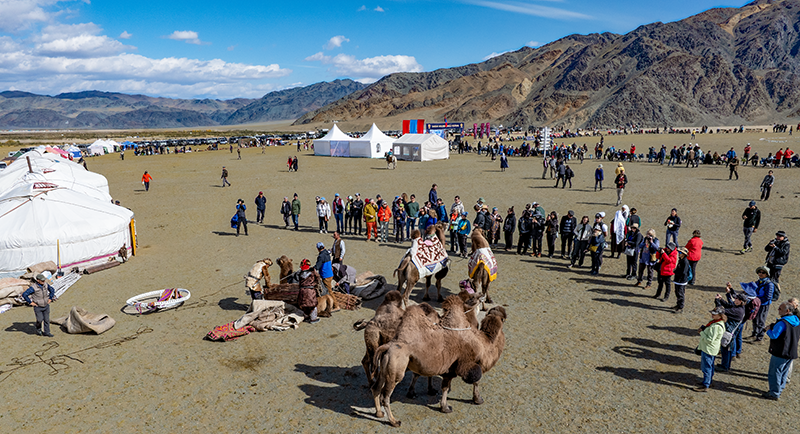
One of the defining characteristics of the Sagsai Golden Eagle Festival is the way the festival grounds are organized in harmony with the surrounding environment.
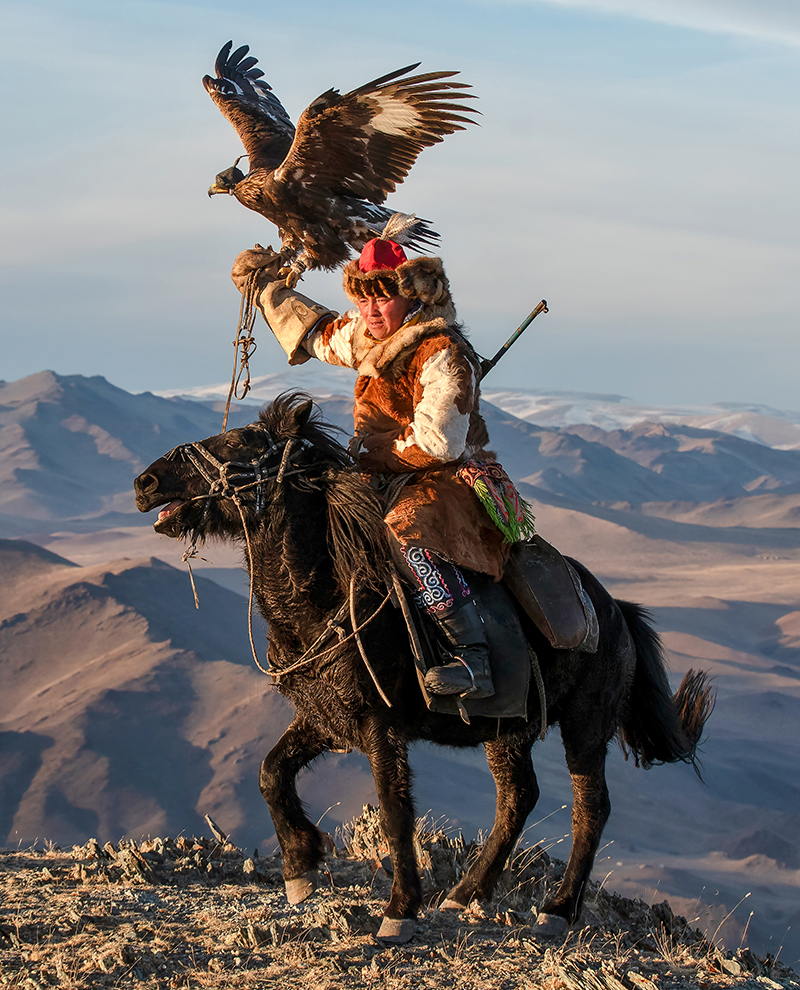
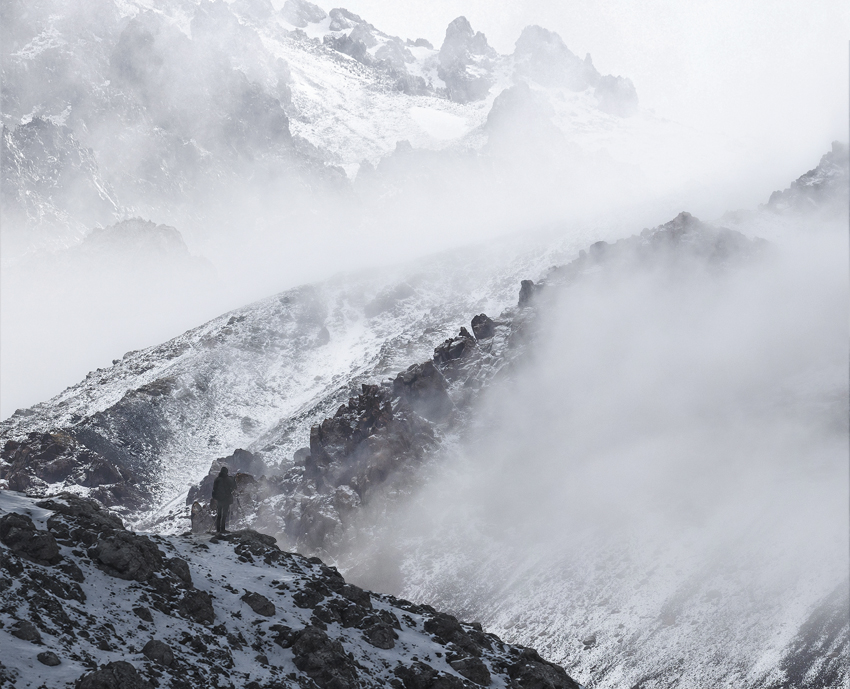
Rather than creating a visually crowded arena dominated by vehicles and modern infrastructure, the festival is carefully arranged so the mountains and open valley remain part of the experience itself. Spectators gather in an open semi-circular viewing area while eagle hunters and horse riders perform against a backdrop of open terrain and surrounding mountain slopes.
Parking areas, vendor sections, and support facilities are intentionally positioned away from the primary viewing environment so photographers and visitors can experience the competitions without heavy visual distraction. For photographers and filmmakers, this creates something increasingly rare — the opportunity to document eagle hunting culture in a landscape that still feels timeless.
WHEN THE EAGLE HUNTERS APPEAR
For many visitors, the most unforgettable moment of the entire festival happens at the very beginning.
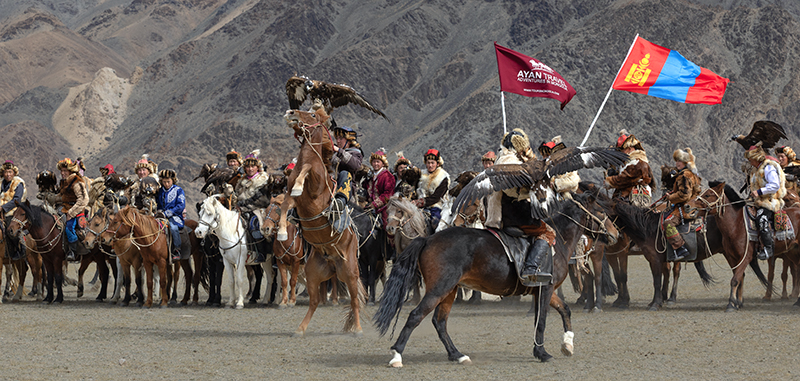
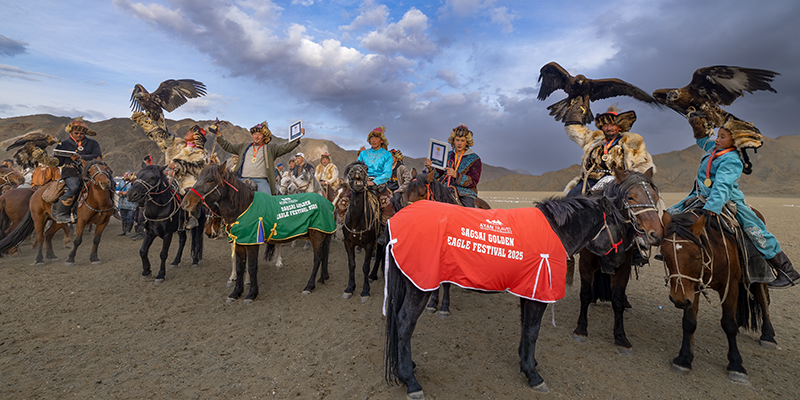
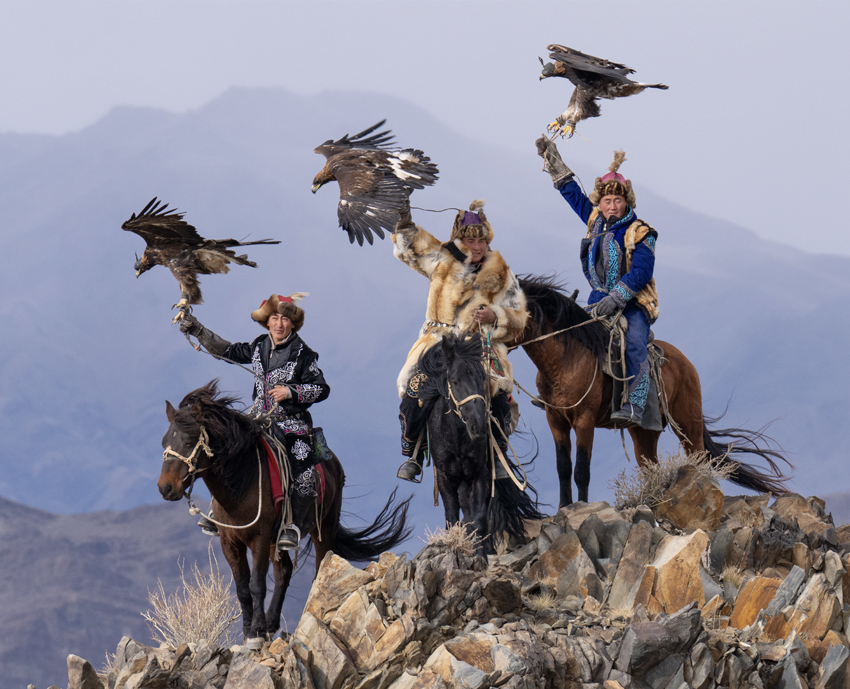
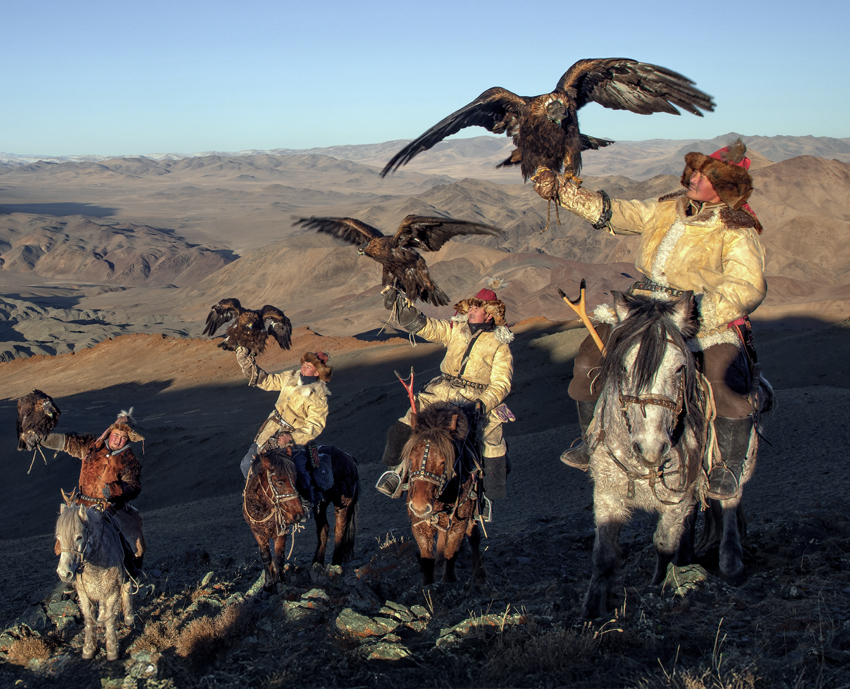
As the opening ceremony approaches, the valley gradually grows quiet before long lines of eagle hunters on horseback begin appearing one after another from the folds of the surrounding mountains. Nearly a hundred riders descend together carrying golden eagles on their arms as they move slowly toward the festival grounds.
For first-time visitors, the moment can feel almost unreal. Some travelers stand frozen between raising their cameras and simply watching in silence while others quietly wipe tears from their eyes.
Against the open valley and mountain backdrop, the riders eventually form a great circle together before the crowd, their horses moving beneath raised eagles as if ancient horsemen had emerged directly from the Altai Mountains themselves. Only after this dramatic arrival does the official festival opening truly begin.
THE COMPETITIONS
At the center of the festival are the eagle hunting competitions themselves — events that combine horsemanship, eagle handling, speed, discipline, and deep trust between hunter and bird.
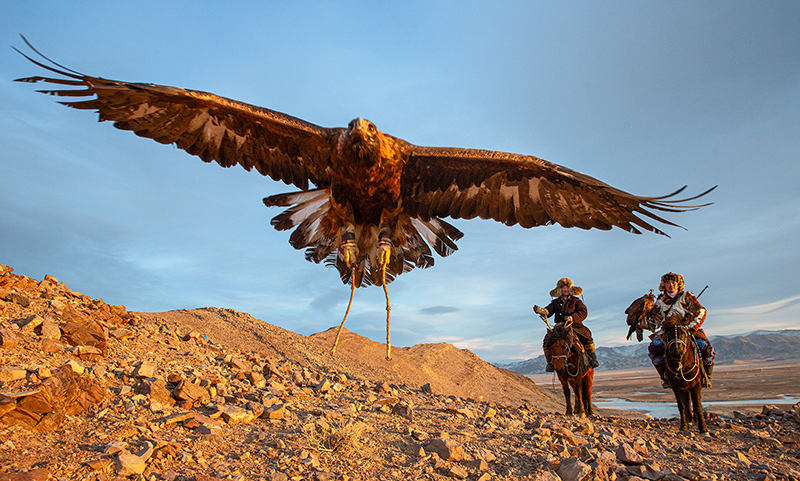
One of the most dramatic competitions takes place high along the mountain slopes above the valley. An eagle hunter waits below on horseback while another person assists from the mountainside above, releasing the hunter’s eagle from a distant ridge.
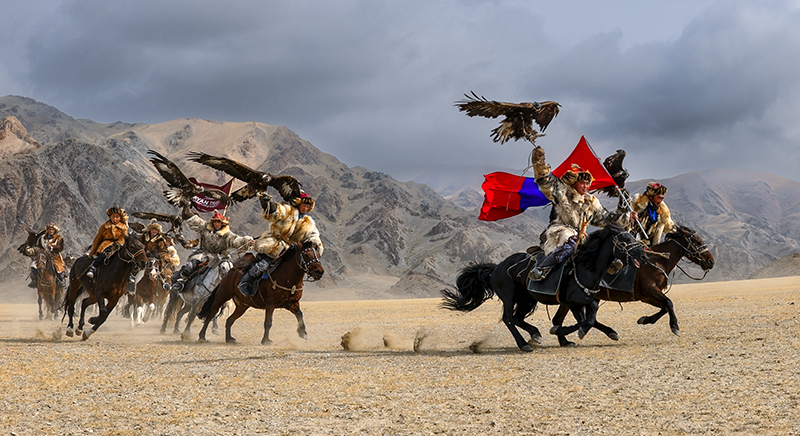
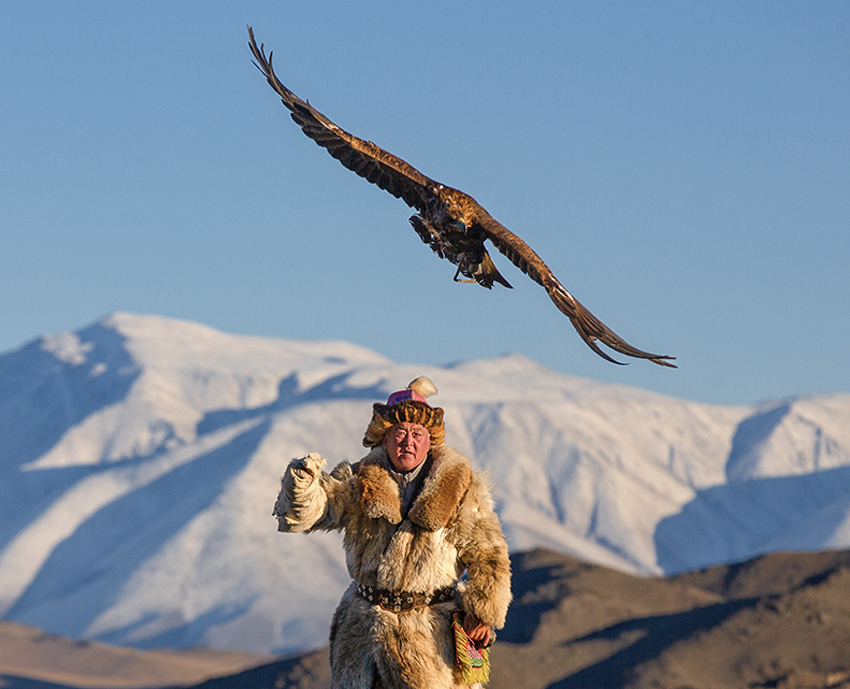
As the hunter calls from below using the familiar voice and calls recognized by the bird, the eagle circles through the mountain air before descending rapidly toward its owner. In one competition, the eagle must return directly to the hunter’s arm. In another, the eagle is released toward a fox skin dragged behind a galloping horse across the valley floor.
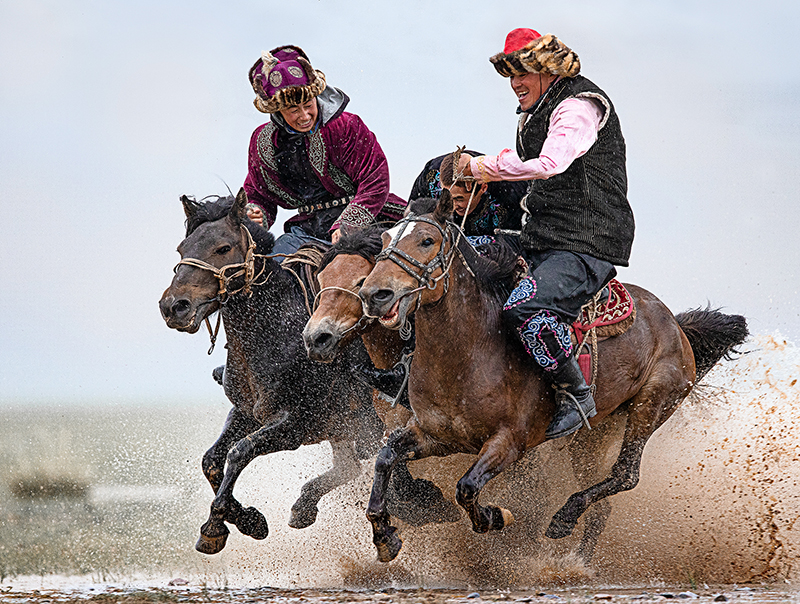
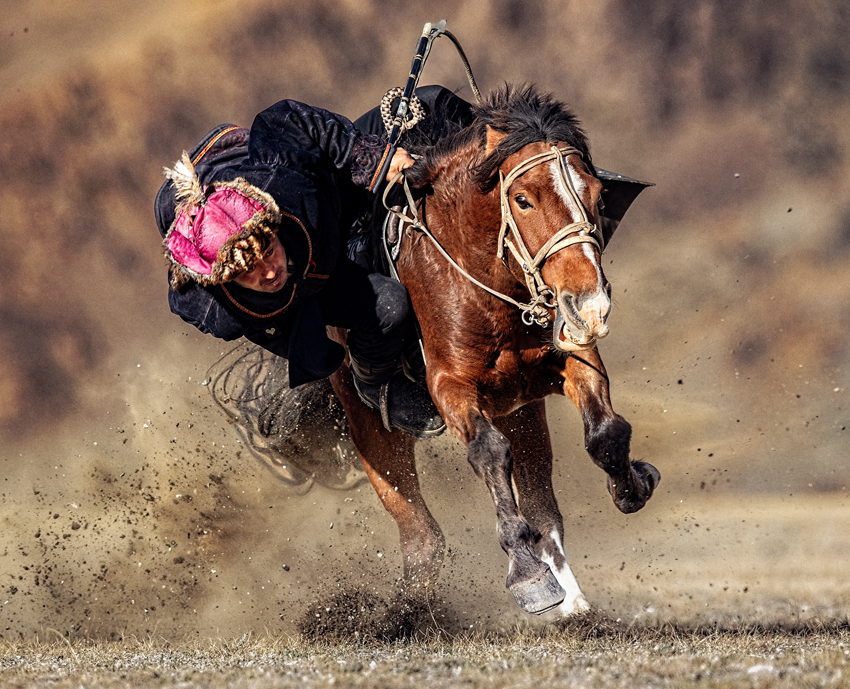
Traditional horseback games also form an important part of the festival. Riders compete in horseback coin pickup games requiring speed, balance, and precision, while another major competition involves horsemen battling to seize and carry a goat skin across the field in a traditional Central Asian horseback contest demanding strength, endurance, and horsemanship.
Another beloved event is the traditional horseback game between young men and women, where couples race side by side across the open field in a playful competition combining speed, humor, beauty, and horsemanship.
MORE THAN AN EAGLE FESTIVAL
Although eagle hunting remains the heart of the festival, the atmosphere surrounding Sagsai reflects a much broader picture of Kazakh nomadic culture.
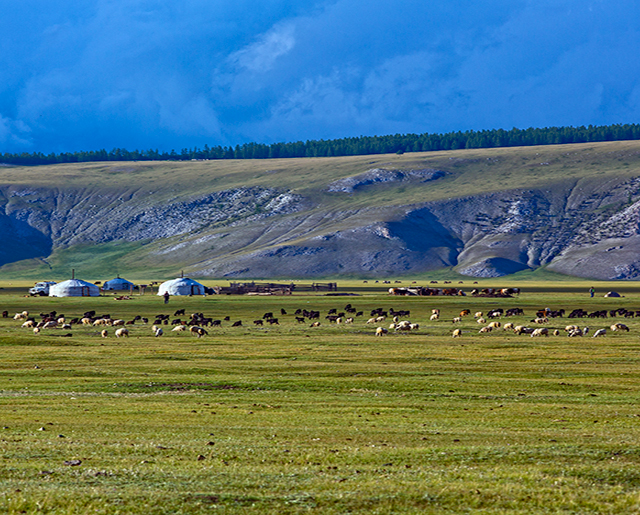
Before the official opening begins, nomadic families arrive across the valley with camels, horses, cattle, sheep, and goats before setting up their gers near the festival grounds. Women display handmade embroidery and traditional crafts while local artisans and merchants organize cultural market areas featuring regional products and handmade goods.
Throughout the festival, visitors can attend cultural concerts performed by local musicians, dancers, and children from Sagsai and Bayan-Ulgii Province. Traditional Kazakh music, including the sound of the dombra and performances such as Khaira Jorga, become part of the atmosphere across the festival grounds.
For many visitors, these moments become just as memorable as the competitions themselves.
WHY MANY PHOTOGRAPHERS PREFER SAGSAI FESTIVAL
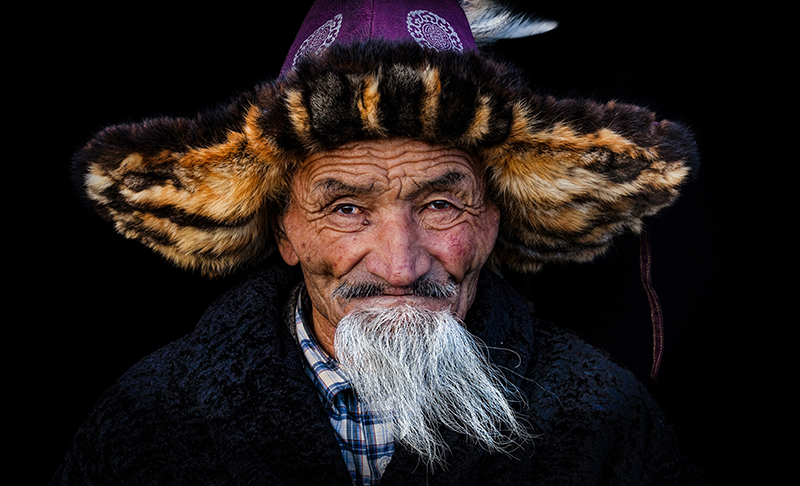
Over the years, the Sagsai Golden Eagle Festival has become increasingly recognized among photographers and documentary filmmakers searching for a more open and visually immersive festival environment.
Part of this comes from the landscape itself — open mountain backdrops, cleaner visual space, fewer modern distractions, and natural movement across the surrounding valley. The festival layout is intentionally designed to preserve visual openness rather than creating heavily crowded viewing environments.
Many photographers first arrive for the festival itself before later returning for winter eagle hunting expeditions, mountain portrait sessions, family stays, and long-term documentary projects throughout the Altai region.
For visual storytellers, Sagsai offers a rare balance between cultural authenticity, visual clarity, and strong photographic atmosphere.
TRAVEL TIMING ADVANTAGES
The timing of the Sagsai Golden Eagle Festival also creates important travel advantages for visitors exploring western Mongolia more broadly.
Because the festival takes place earlier in September, travelers often still have favorable conditions for visiting the Altai Mountains before heavier snowfall begins in higher mountain passes later in autumn. This makes it easier to combine the festival with journeys into places such as Altai Tavan Bogd National Park.
The earlier timing also allows travelers to combine the festival with Gobi Desert journeys while many seasonal camps and tourism facilities across southern Mongolia are still operating before winter closures begin in October.
HOW TO ATTEND THE SAGSAI GOLDEN EAGLE FESTIVAL
The Sagsai Golden Eagle Festival takes place annually on September 17–18 near Sagsai soum in Bayan-Ulgii Province.
Because accommodations, domestic flights, and local family stays are limited during the festival period, early planning is recommended.
Many travelers join organized festival departures or photography tours that include:
- Domestic flights to western Mongolia
- Local transportation
- Festival access
- Eagle hunter family visits
- Photography-focused experiences
- Altai Mountain excursions
- Traditional Kazakh cultural activities
Small-group journeys are especially popular among photographers and travelers looking for a deeper cultural experience beyond the main festival itself.
Since first launching the festival in 2018, Ayan Travel has worked together with local eagle hunter families and the Sagsai Eagle Hunter Association to help develop and preserve the festival as one of western Mongolia’s leading cultural events.
Today, Ayan Travel remains the festival’s main organizer, creating cultural journeys, festival departures, and photography-focused experiences throughout the Altai region.
If you are interested in attending the Sagsai Golden Eagle Festival, visiting eagle hunter families, or exploring western Mongolia can plan your journey with us.
Visit Mongolian Photos


Latest Blogs


Most Read Blogs


Useful Travel Tips

Blog Archive
Related Tours


